Walls Within Walls: The Mind's Compulsion to Contain Itself
There is a particular kind of vertigo that arrives not when you stand at the edge of something vast, but when you realize the room you are standing in is itself inside another room, and that room inside another still. This is not a description of a building. It is a description of how the human mind organizes its relationship to existence.
We tend to think of mental frameworks—routines, belief systems, social roles, ideological commitments—as tools we pick up and set down at will. The more honest account is considerably less flattering. We do not simply use these structures. We inhabit them. And then, almost without noticing, we build new ones around them.
The Nested Architecture of Meaning
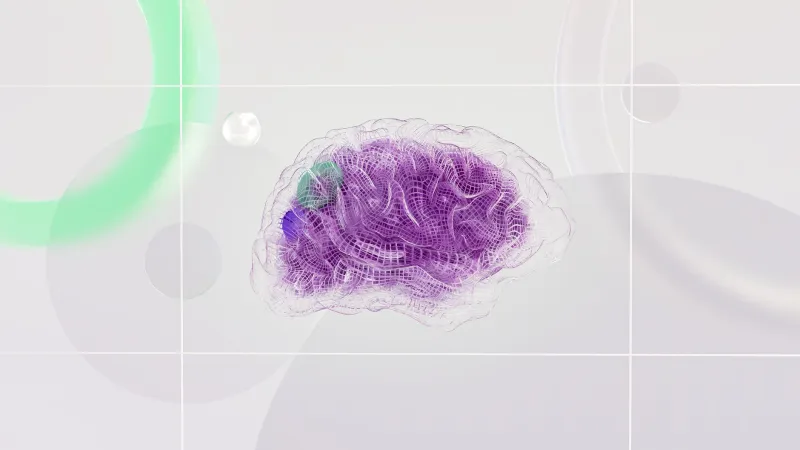
Neuroscience has long understood that the brain is, at its core, a prediction machine. It does not experience the world directly; it constructs a working model of the world and updates that model when reality fails to comply. This is efficient. It is also the origin of a peculiar trap.
Every model the brain builds is, by definition, a simplification—a cage drawn around a portion of the infinite to make it manageable. The problem is that simplifications have edges, and edges produce anxiety. The mind's solution to this anxiety is characteristically recursive: build another model around the first one. Establish a routine to manage uncertainty. Develop a philosophy to justify the routine. Construct an identity around the philosophy. Find a community that reinforces the identity. Each layer feels like progress. Each layer is also, in a precise sense, a further narrowing.
The philosopher Gregory Bateson described this tendency as a feature of systems that learn to learn—what he called deutero-learning. A mind that has mastered the art of building containers will, when distressed, reach automatically for another container. The behavior becomes self-reinforcing in ways that are genuinely difficult to observe from the inside, because the observer is always located within the most recent layer.
The American Efficiency of Self-Enclosure
This tendency is not culturally neutral. In the United States, the construction of personal systems—productivity frameworks, morning routines, five-year plans, wellness protocols—has achieved something approaching the status of civic virtue. The culture rewards the appearance of mastery, and mastery is most legibly demonstrated through structure. We optimize our schedules to protect our creativity. We curate our social circles to guard our energy. We develop personal philosophies to insulate ourselves from existential noise.
None of these impulses is inherently misguided. The difficulty arises when the structures multiply faster than we can evaluate them—when the optimization of life becomes so elaborate that the life itself is no longer visible beneath the scaffolding. At that point, the cage is not a failure of discipline. It is its product.
This is the recursion problem: not that we build one container, but that we keep building, and each new container is experienced as freedom from the last one, right up until the moment it becomes the next constraint.
What the Brain Is Actually Protecting
To understand why this loop persists, it helps to understand what it is protecting against. The answer, at the deepest level, is not chaos or failure or social judgment, though all of those register as threats. The answer is openness itself.
Unstructured experience—time without purpose, thought without direction, identity without role—activates what neuroscientists sometimes call the default mode network, the constellation of brain regions that becomes most active in the absence of external tasks. For many people, this activation is deeply uncomfortable. The mind, left without a project, turns on itself. It rehearses grievances, anticipates catastrophes, interrogates its own adequacy. The container, however constraining, at least provides a focus. It gives the restless mind somewhere to push.
This is why dismantling all the layers at once—the fantasy of the radical reset, the clean break, the total reinvention—almost never produces the liberation it promises. The structures are removed, but the drive that built them remains entirely intact. Within months, sometimes weeks, new containers appear. Different walls, same compulsion.
The Recursive Loop as a Philosophical Problem
Philosophy has circled this problem from multiple directions. Jean-Paul Sartre's concept of bad faith describes the tendency to flee from the terror of radical freedom into the comfort of fixed roles and definitions—to become, in his formulation, a thing rather than a consciousness. Albert Camus located the absurd precisely at the collision between the human need for meaning and the universe's refusal to supply it, suggesting that the compulsive construction of meaning-systems is itself a form of avoidance.
More recently, thinkers in the Buddhist-adjacent tradition of secular philosophy have pointed toward something they call metacognitive awareness—the capacity to observe one's own mental frameworks without immediately inhabiting them. This is not detachment in the passive sense. It is closer to what the astronomer might feel looking at a galaxy: full attention, without the compulsion to be inside it.
The distinction matters. The goal is not to stop building models—the brain cannot do that any more than the lungs can stop cycling air. The goal is to develop a different relationship to the models one builds. To hold them, as the philosopher puts it, lightly.
Recognizing the Pattern Without Becoming It
If total demolition is a false solution and unconscious accumulation is the problem, what remains? The answer that emerges from both neuroscience and philosophy is less dramatic than the cultural narrative of transformation tends to prefer: sustained, deliberate attention to the moment of construction itself.
The recursion loop typically begins not with a grand decision but with a small discomfort—an ambiguity tolerated for a moment and then resolved by the addition of a new rule, a new category, a new wall. The intervention, when it comes, arrives at that moment. Not to refuse the impulse entirely, but to sit with it long enough to ask what it is actually protecting against, and whether that protection is still necessary.
This is slower work than building. It requires tolerating the vertigo of the open room—the space before the next layer is added. It requires, in some fundamental sense, a willingness to remain briefly uncontained.
The Void at the Center
There is something almost cosmological about this problem. The universe itself, as far as physics can determine, has no outer wall. It does not end so much as continue, expanding into a space that is not quite space. The human mind, by contrast, cannot easily conceive of itself without boundaries. It reaches instinctively for the edge, and when it cannot find one, it draws one.
Perhaps the most honest thing that can be said about the recursion problem is this: the compulsion to build cages is not a flaw in consciousness. It is one of consciousness's most characteristic expressions. The question is not how to eliminate it, but how to become the kind of mind that can notice it—that can stand for a moment at the threshold of the newest wall and ask, with genuine curiosity, whether this one, too, was always going to be too small.
The void, after all, is not empty. It is simply uncontained. And there is a difference.