What the Quiet Knows: The Neuroscience of Consciousness at the Edge of Nothing
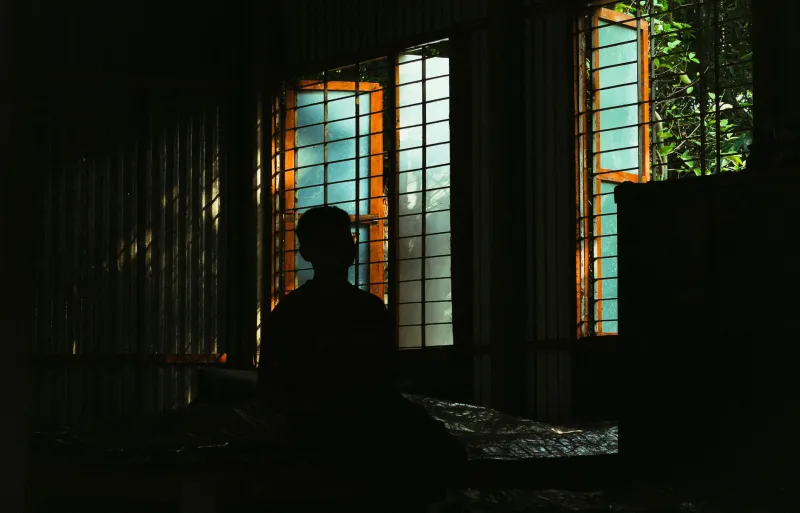
There is a moment that experienced meditators describe in strikingly similar terms across traditions, cultures, and centuries. The internal narrator goes quiet. The boundary between the self and everything surrounding it begins to soften and, in some cases, disappears entirely. What remains is not unconsciousness — not the blankness of dreamless sleep or the fog of anesthesia — but something practitioners variously call pure awareness, open presence, or simply the void. It feels, they insist, more real than ordinary waking life, not less.
For most of the twentieth century, science treated such reports as poetic exaggeration at best, mystical delusion at worst. That posture has shifted considerably. Over the past two decades, neuroscientists equipped with fMRI scanners and EEG arrays have begun inviting long-term meditators — Tibetan monks, Zen practitioners, veterans of intensive silent retreats — into laboratories to observe what their brains actually do during these episodes of radical stillness. The findings are, depending on your prior assumptions, either deeply surprising or quietly inevitable.
The Network That Defines You
To understand what meditation disrupts, it helps to understand what it is disrupting. The default mode network, or DMN, is a constellation of brain regions — the medial prefrontal cortex, the posterior cingulate cortex, the angular gyrus, among others — that becomes most active precisely when we are doing nothing in particular. Daydreaming, ruminating, mentally rehearsing future conversations, replaying past embarrassments: these are DMN activities. Crucially, the DMN is also understood to be the neural substrate of what researchers call the narrative self — the ongoing autobiographical story you tell yourself about who you are.
When you sit down to meditate, particularly in practices oriented toward open awareness rather than focused attention on a single object, something unusual begins to happen to the DMN. Its activity does not simply decrease, as one might expect if the brain were merely resting. Instead, the functional connectivity within the network reorganizes. Regions that ordinarily operate in close coordination begin to decouple. The incessant self-referential chatter — the loop of identity maintenance that most of us experience as the background hum of being alive — begins to lose its structural coherence.
When the Story Stops
This is where the phenomenology becomes genuinely strange, and genuinely instructive. Practitioners who have logged thousands of hours of meditation often report that the cessation of self-referential thought does not feel like a loss. It feels, paradoxically, like an expansion. Neuroscientist and author Sam Harris, who has written extensively about contemplative practice from a secular standpoint, describes the experience as discovering that consciousness itself — the sheer fact of awareness — does not require a subject at its center. The sense of being a self looking out at the world is revealed, in these moments, as a construction rather than a given.
Research published in journals including NeuroImage and PNAS has documented measurable changes in meditators during such states. Gamma wave synchrony — associated with heightened perceptual integration — increases dramatically in experienced practitioners during deep meditation, particularly in frontal and parietal regions. Meanwhile, the amygdala, the brain's primary threat-detection architecture, shows reduced reactivity. The brain is not shutting down. It is, by certain measures, operating with unusual coherence and efficiency. Silence, apparently, is not the absence of neural activity. It is a different kind of activity altogether.
The Dissolution Question
Perhaps the most philosophically charged aspect of meditative experience is what researchers have termed ego dissolution — the temporary collapse of the felt boundary between self and world. This phenomenon, which can occur in deep meditation as well as in certain psychedelic states (psilocybin research at Johns Hopkins and NYU has documented striking parallels), raises a question that no neuroscientist has yet answered to universal satisfaction: if the sense of being a discrete, bounded self is something the brain constructs, what exactly is doing the constructing, and what remains when the construction pauses?
One influential framework, advanced by neuroscientist Anil Seth at the University of Sussex, proposes that the self is a controlled hallucination — a predictive model the brain generates to navigate a complex world. Under this view, meditation does not reveal some deeper metaphysical truth about consciousness; it simply disrupts the machinery of prediction long enough for the model to flicker. The void is real, but it is a functional void, not a cosmic one.
Others are less certain that the reductionist account fully closes the question. Philosopher Thomas Nagel's enduring challenge — that there is something it is like to be a conscious creature, and that this subjective quality resists purely physical description — haunts the meditation literature in ways that laboratory data alone cannot resolve. When a practitioner reports that awareness, stripped of its ordinary content, feels infinite and self-luminous, we are dealing with a category of experience that third-person neuroscience can correlate but may not be able to fully explain.
Optimization's Opposite
There is a cultural dimension to this inquiry that deserves direct attention. American life, in the early twenty-first century, has become saturated with the logic of optimization. Productivity systems, biometric tracking, cognitive enhancement supplements, algorithmic scheduling — the implicit promise of each is that the self is a project to be refined, a performance to be improved. Meditation has not escaped this framing; the wellness industry has enthusiastically repackaged contemplative practice as a tool for executive focus and stress reduction, stripping it of its more radical implications.
But what the neuroscience of deep meditative states actually suggests is nearly the inverse of optimization. The brain appears to function in qualitatively different — and in some respects more integrated — ways precisely when the relentless project of self-improvement is suspended. The regions associated with rumination and self-monitoring quiet down. The systems associated with broad, flexible awareness become more prominent. The brain, left to its own devices in genuine stillness, does not collapse. It opens.
This is not a trivial finding. It implies that the restless, perpetually self-monitoring consciousness that modern American culture treats as the default and desirable state may itself be a kind of narrowing — a chronic contraction of cognitive possibility in service of identity maintenance.
Into the Void, Literally
The void that meditators describe is not, by their accounts, a nihilistic emptiness. It is closer to what the physicist David Bohm called the implicate order — a fullness so total that ordinary categories of presence and absence no longer apply. Whether one interprets this through the lens of Buddhist metaphysics, secular neuroscience, or speculative physics, the convergence is striking: at the edges of ordinary selfhood, something persists that does not behave like nothing.
What we do with that observation — scientifically, philosophically, personally — remains genuinely open. But the fact that the brain can enter states in which the constructed self temporarily dissolves, and that these states are associated not with dysfunction but with measurable coherence and reported clarity, is among the more unsettling and illuminating findings in contemporary consciousness research.
The silence between thoughts is not a gap in the signal. It may be the signal itself — broadcasting at a frequency we have only recently learned to detect.