The Glitch Is the Gift: What Your Brain's Blank Moments Are Actually Doing
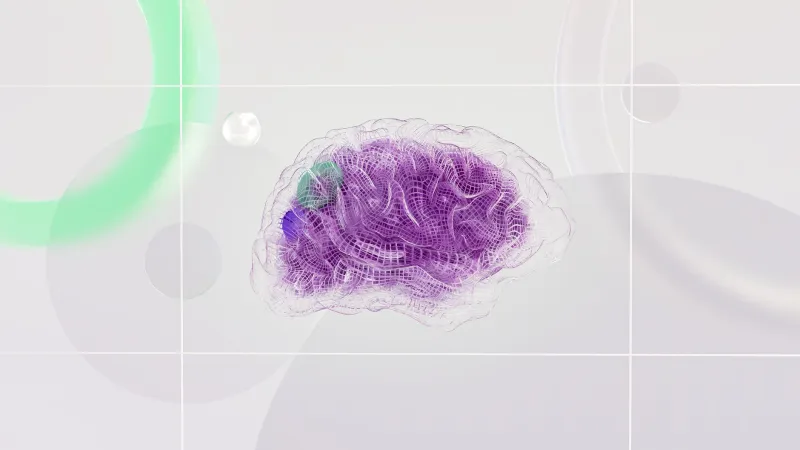
There is a particular kind of panic that arrives when the mind goes blank. You are mid-sentence, mid-thought, mid-meeting — and then nothing. A soft erasure. The word you needed dissolves before you can reach it. The idea that felt so close a moment ago retreats behind some interior curtain. You smile awkwardly. You say where was I? And somewhere beneath the social embarrassment, a quieter anxiety stirs: something is wrong with you.
But what if it isn't?
What if the blank — the glitch, the fog, the momentary void — is not a symptom of cognitive failure but rather evidence of a mind doing exactly what it was designed to do?
The Tyranny of Optimal Cognition
American culture has developed an almost theological relationship with mental sharpness. From the proliferation of nootropic supplements lining pharmacy shelves to the billion-dollar productivity-app industry promising frictionless thought, we have collectively decided that the ideal brain is one that never stutters, never drifts, and never, under any circumstances, goes quiet.
This obsession is not without consequences. When we pathologize every lapse in mental performance — diagnosing ordinary distraction as disorder, reframing natural fatigue as personal failure — we construct an impossible standard against which the perfectly healthy human mind will always fall short. We have, in essence, declared war on our own neurology.
The irony is considerable. In our relentless pursuit of cognitive optimization, we may be suppressing the very mechanisms that make genuine intelligence possible.
What Neuroscience Says About the Quiet
In the early 2000s, neurologist Marcus Raichle and his colleagues at Washington University in St. Louis made a discovery that quietly upended assumptions about how the brain works. They identified what is now known as the default mode network — a constellation of brain regions that become more active when a person is not engaged in focused, external tasks. When you stop concentrating, a different kind of neural machinery switches on.
The default mode network is implicated in a remarkable range of functions: autobiographical memory, imaginative simulation, moral reasoning, future planning, and — critically — creative insight. It is the network that hums beneath daydreaming, beneath the shower-thought breakthrough, beneath the strange associative leaps that produce original ideas. It is, in many ways, the architecture of the inner life.
And it only activates fully when the directed, task-focused mind steps aside.
Brain fog, then, may sometimes represent not a failure of this system but a signal from it — a kind of neurological pressure valve releasing accumulated cognitive load, making room for the default network to run its quiet, essential processes. The blank moment is not always an absence. It is sometimes a clearing.
The Role of Noise in Signal Processing
There is a concept in information theory called stochastic resonance — the counterintuitive phenomenon in which a certain amount of random noise actually improves a system's ability to detect weak signals. Too little noise, and faint signals go unregistered. Too much, and they are buried. But the right amount of noise makes the system more sensitive, more capable.
Some researchers have begun applying this framework to neural cognition. The brain, it appears, is not optimized for silence. A degree of internal noise — the mental static we find so frustrating — may actually enhance the detection of subtle patterns, support flexible thinking, and prevent the rigid over-specialization that makes a mind brittle rather than adaptive.
The moments when our thoughts feel most disorganized, most scattered, most glitchy, may be moments of heightened receptivity rather than diminished capacity. We are, in those instants, more open than we know.
When the Mind Refuses to Perform
Consider the specific experience of drawing a blank under pressure — the name that vanishes the moment you need it, the argument that collapses at the lectern, the creative solution that refuses to surface during the brainstorm but arrives fully formed at 2 a.m. This is not random. It reflects something fundamental about how memory and cognition operate under stress.
Cortisol — the primary stress hormone — actively interferes with the prefrontal cortex, the region responsible for working memory and executive function. When the stakes feel highest, the brain's retrieval mechanisms are most compromised. The blank is, in this sense, a physiological response to perceived threat. It is the mind prioritizing survival circuitry over social performance.
Knowing this does not make the experience less uncomfortable. But it does reframe it. The blank is not evidence of inadequacy. It is evidence that you are a biological organism operating under biological constraints — constraints that evolved long before quarterly performance reviews existed.
Creativity Lives in the Gaps
The history of human discovery is, in no small part, a history of productive confusion. Newton's apple, Archimedes in his bath, Kekulé dreaming of a serpent eating its own tail and waking to understand the ring structure of benzene — these are not stories of relentless focus. They are stories of minds that had worked hard, gone quiet, and then received.
Psychologist Graham Wallas described this in 1926 as the incubation stage of creativity — a period of apparent inactivity during which the unconscious mind continues to process a problem, often arriving at solutions that deliberate effort had failed to produce. Modern neuroimaging has since given this model biological credibility. The brain does not stop working when conscious attention withdraws. It shifts registers.
Brain fog, wandering attention, and moments of blankness may be the phenomenological surface of this incubation — the felt experience of a mind that is, beneath the apparent stillness, doing some of its most interesting work.
Reclaiming the Unoptimized Mind
None of this is an argument against rest, medical care, or taking cognitive difficulties seriously. Persistent brain fog can be a meaningful clinical symptom, and dismissing it is neither wise nor compassionate. The point is not that all mental difficulty is secretly beneficial. The point is more nuanced: that our cultural default — to interpret every cognitive irregularity as malfunction — is itself a kind of distortion.
We live in a civilization that has made productivity a moral category. To be unfocused is to be irresponsible. To daydream is to waste time. To go blank is to fail. These are not scientific conclusions. They are cultural judgments dressed in the language of optimization — and they may be costing us something we cannot easily replace.
The void between thoughts is not empty. It is full of processes we do not yet fully understand, producing outcomes we often cannot predict, in service of a kind of intelligence that resists being scheduled, quantified, or upgraded.
Into the Quiet
The cosmos, for all its apparent activity, is mostly silence. The vast majority of the universe is not stars or galaxies or supernovae — it is the dark, the space between, the regions where nothing seems to be happening and everything is, in ways we are only beginning to comprehend, still unfolding.
Perhaps the mind is the same. Perhaps the most honest thing we can do — the most scientifically literate, the most philosophically mature — is to stop treating the silence between thoughts as a problem to be solved, and begin treating it as what it may actually be: the necessary void from which something new is always, quietly, about to emerge.