The Unbearable Hush: What Our Fear of Silence Reveals About the Minds We've Become
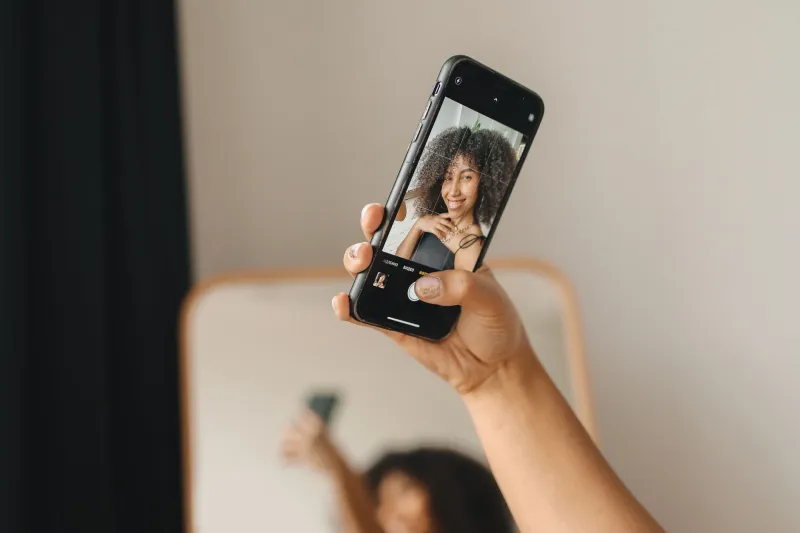
There is a moment — perhaps you have felt it — that arrives when the podcast ends, the playlist runs out, and the room goes still. It lasts perhaps three seconds before the hand moves instinctively toward the phone. Not because there is something to check. Not because anything urgent has arrived. Simply because the silence, unprompted and uninvited, has become intolerable.
This is not a minor cultural quirk. It is a diagnostic signal. The fact that stillness now reads as discomfort rather than relief — that the absence of stimulation has become more unsettling than stimulation itself — tells us something profound and troubling about what a decade of always-on media consumption has done to the architecture of the American mind.
The Noise We Chose, and the Quiet We Lost
For most of human history, silence was not something that required engineering or protection. It was the default condition of life. The challenge was noise — the world was loud in ways that were difficult to escape. The industrial revolution changed that arithmetic somewhat, filling cities with mechanical din. But the smartphone era completed the transformation entirely. For the first time in history, a significant portion of the population now carries a device capable of filling every waking moment with content, and has chosen, overwhelmingly, to use it that way.
The consequences are measurable. A widely cited study from the University of Virginia found that a significant number of participants preferred administering mild electric shocks to themselves over sitting alone with their thoughts for fifteen minutes. The researchers described their findings with barely concealed astonishment. The participants, for their part, seemed unsurprised. Sitting with nothing felt worse than pain. At least pain was something.
That is a remarkable inversion. And it did not happen by accident.
Anxiety at the Noise Floor
In audio engineering, the noise floor refers to the baseline level of background signal present in any recording system — the ambient hiss beneath the music. What we are describing here is something like a psychological noise floor: the minimum level of stimulation a person requires before the absence of input begins to register as distress.
That floor has risen dramatically. The brain, through repeated exposure, adapts to high-stimulation environments by recalibrating its baseline expectations. Dopaminergic systems that once responded to modest rewards — a quiet walk, an unstructured afternoon, the drift of an unoccupied mind — no longer fire with the same reliability. The brain has, in the most literal neurological sense, been trained to require more.
This recalibration is not merely about entertainment. It extends to the way we process emotion, tolerate ambiguity, and engage with the texture of our own inner experience. Silence does not simply remove noise. It removes the buffer between the self and whatever the self contains. And for a great many people, that confrontation has become genuinely frightening.
What We Are Not Saying to Ourselves
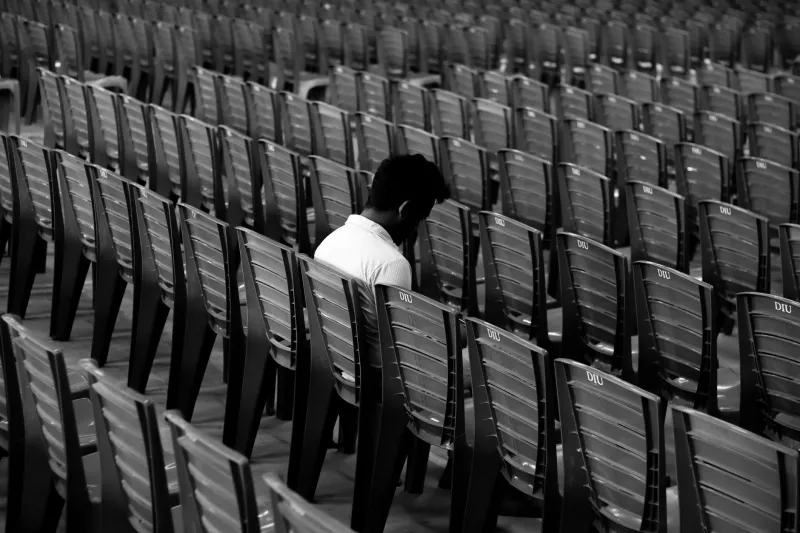
Here is the uncomfortable proposition at the center of this phenomenon: the silence we flee is not empty. It is full — full of the thoughts we have been too busy to think, the emotions we have been too distracted to feel, the questions we have been too overscheduled to ask. The noise we surround ourselves with is not incidental. It is strategic, even if unconsciously so.
Grief that has not been processed, ambitions that have not been examined, relationships that have not been honestly assessed — all of these accumulate in the margins of a life lived at maximum volume. Silence is the condition under which they surface. And in a culture that has largely abandoned the contemplative traditions — religious, philosophical, or otherwise — that once provided frameworks for sitting with difficult interior material, many Americans have no practiced method for receiving what the quiet brings.
The phone, the podcast, the television left on as ambient wallpaper: these are not merely entertainment choices. They are, in many cases, avoidance technologies. Sophisticated, pleasurable, socially normalized — but avoidance nonetheless.
The Void as Mirror
There is a concept embedded in the premise of this publication that feels particularly relevant here. The void is not nothing. It is the space in which something essential becomes visible — where the signal that gets drowned out by constant noise finally has room to emerge. Mystics across traditions have understood this intuitively. Contemplatives, philosophers, and artists have long sought conditions of quiet not as an absence of experience but as a precondition for a certain kind of experience: the kind that requires the self to be present to itself.
What the modern terror of silence suggests is that we have lost confidence in what that encounter might yield. We have come to distrust our own inner lives — or more precisely, we have been conditioned to regard them as less interesting, less rewarding, less immediately satisfying than the algorithmically curated alternatives on offer at every waking moment.
This is, in the deepest sense, an existential problem. Not merely a wellness problem, not merely a screen-time problem. A problem of self-relation. Of whether the self, stripped of its distractions, is something one can bear to be with.
Reclaiming the Uncomfortable Quiet
None of this is to romanticize silence in a naive or prescriptive way. There is such a thing as pathological rumination, and solitude without structure can be genuinely harmful for people navigating depression or trauma. The point is not that quiet is always good. The point is that the capacity to tolerate it — to sit with the unmediated self without immediately reaching for an escape — is a form of psychological literacy that is quietly disappearing.
Recovering that capacity does not require dramatic renunciation. It does not demand the deletion of apps or the smashing of screens. It requires something more modest and, in its own way, more demanding: the repeated, deliberate choice to remain in the discomfort a little longer. To let the silence say what it has been trying to say.
The Stoics called this practice premeditatio — a deliberate encounter with difficulty as preparation for living well. The Zen tradition built entire monasteries around the cultivation of stillness. Contemporary neuroscience, in its more sober moments, arrives at similar conclusions through different language: default mode network activity, associated with self-referential thought and creative integration, requires precisely the kind of undirected mental space that constant stimulation forecloses.
We have built a civilization of extraordinary noise. We have filled every frequency, colonized every idle moment, and trained ourselves to interpret the gap between sounds as a problem to be solved rather than a space to be inhabited.
The silence was never the void. We were.
And perhaps the most urgent question of this particular cultural moment is whether we still have the courage to find out what lives there.