Citizens of Nowhere: The Strange Comfort of Futures We Will Never Inhabit
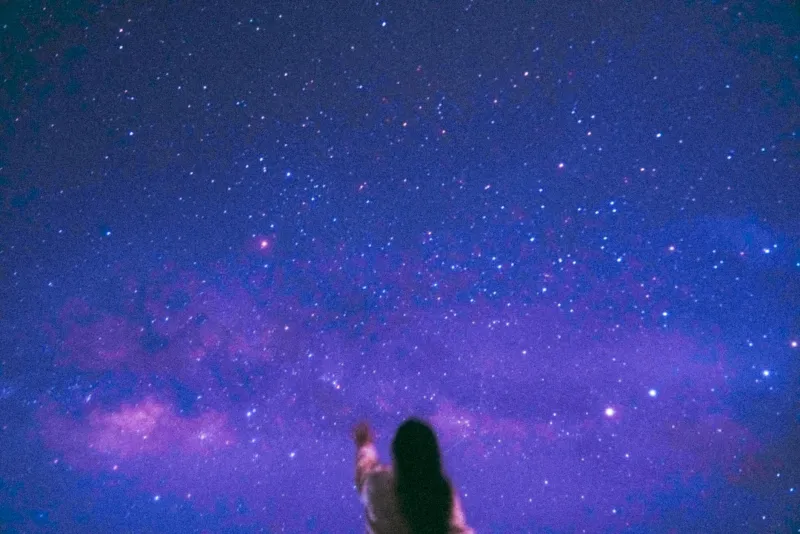
There is something quietly extraordinary about a species that can grieve events scheduled to occur five billion years from now. Cosmologists speak of the heat death of the universe—the eventual entropic stillness when all stars have collapsed and all energy has equalized into an infinite, featureless cold—and a surprising number of people respond not with indifference but with something resembling mourning. We did not witness the formation of the first galaxies. We will not witness their dissolution. And yet we feel implicated in both.
This is the peculiar emotional territory that defines modern cosmic anxiety: a longing for futures so remote they exist less as predictions than as science-fictional myths. Mars colonies. Artificial general intelligence that eclipses human cognition. Civilizations that harvest the energy of entire stars. The technological singularity. These are the cathedrals of the contemporary imagination—vast, luminous, and entirely uninhabitable by the people who built them.
The question worth sitting with is not whether these visions are intellectually valid. Many of them are grounded in serious science and rigorous extrapolation. The question is what it means, psychologically and existentially, that so many of us have chosen to make our emotional home in them.
The Telescope Pointed Inward
Psychologists have long understood that human beings are uniquely capable of what is called mental time travel—the ability to project consciousness forward and backward along the timeline of one's own life. This capacity is adaptive. It allows planning, anticipation, and the construction of a coherent personal narrative. But somewhere in the evolution of culture and technology, that capacity appears to have overreached its original parameters.
We no longer merely imagine next year or the next generation. We imagine the next millennium. We run thought experiments about civilizations that will rise and fall after every person alive today has been forgotten. And crucially, we do this not in the detached spirit of academic inquiry but with genuine emotional investment. Reddit threads debating the likelihood of a Type III civilization on the Kardashev scale generate the kind of passionate engagement once reserved for theology. Elon Musk's pronouncements about the multiplanetary future of humanity draw audiences that dwarf those of most contemporary philosophers.
This is not incidental. It reflects something about the specific texture of modern American life—a culture saturated with the language of optimization and progress, yet structurally resistant to the kind of deep, present-tense meaning-making that earlier societies built through ritual, community, and religious practice. When the near future feels uncertain or unsatisfying, the far future becomes a refuge. It is too distant to disappoint.
Profundity as Avoidance
There is a particular social prestige attached to caring about the long-term fate of the cosmos. To worry about existential risk, to read Nick Bostrom on superintelligence, to lose sleep over the Fermi paradox—these signal a kind of intellectual seriousness that is genuinely admired in certain American subcultures. Silicon Valley has made futurism into a virtue. To think at civilizational timescales is to demonstrate that your concerns transcend the petty and the personal.
But virtue can also function as camouflage. The philosopher Albert Camus observed that the absurd arises not from the world itself but from the collision between human longing for meaning and the universe's indifference to that longing. His prescription was not to escape upward into abstraction but to remain in the tension—to revolt, in his word, against meaninglessness by insisting on full engagement with the immediate and the finite.
Contemporary cosmic anxiety often moves in exactly the opposite direction. It resolves the tension by inflating the scale of concern until the personal and present become statistically negligible. Why wrestle with the loneliness of a Tuesday afternoon when you can contemplate the loneliness of the last star? Why confront the difficulty of a particular relationship when you can mourn the eventual silence of the universe? The cosmic frame does not eliminate the wound. It merely renders it too small to see.
This is not to dismiss the genuine intellectual and moral value of long-term thinking. Concerns about climate change, artificial intelligence, and biosecurity demand exactly the kind of multigenerational perspective that short-term political cycles resist. The problem arises when the far future becomes not a responsibility but a residence—a place where the self can feel significant without the friction of actual presence.
What the Longing Is Actually For
It is worth asking what emotional need the distant future is actually serving. When someone reads about the projected colonization of Europa or the theoretical architecture of a Dyson sphere, what are they feeling? Often, it is something that resembles wonder—but wonder of a very specific kind. It is the wonder of belonging to something larger than oneself, of being a thread in a tapestry that extends beyond the visible frame.
This is, at its root, a spiritual hunger. The desire to matter cosmically, to be part of a story with stakes large enough to justify one's existence, is not new. What is new is the form it takes in a secular, technologically accelerated culture. Where previous generations might have located that hunger in religious narrative—the soul's journey, the divine plan, the afterlife—many Americans today locate it in the narrative of civilizational progress. The arc of the universe bends toward complexity, toward consciousness, toward something. We want to be on the right side of that arc.
The tragedy is that the arc is so long it cannot be walked. You can point toward Mars but you cannot live there, not yet, and perhaps not ever in any form that resembles your current self. You can theorize about the singularity but you cannot prepare for it in any meaningful daily sense. The future, at those scales, is not a destination. It is a direction—and directions, by definition, are never arrived at.
Coming Back to the Room
None of this means the far future should be abandoned as a subject of thought. The universe's scale is genuinely humbling, and humility is not nothing. But humility is only useful when it returns us to the ground rather than lifting us permanently above it.
The philosopher Simone Weil wrote about attention as a form of love—the capacity to be fully present to what is actually in front of you, in all its specificity and resistance. That kind of attention is harder than it sounds, especially in a culture that monetizes distraction and rewards the appearance of big thinking. It requires tolerating the smallness of the immediate, the unresolved quality of the actual, the way that real life refuses the narrative clarity of a well-constructed vision of 2150.
The void that this site takes its name from is not only the one between galaxies. It is also the one inside a Tuesday afternoon when nothing feels sufficient. The cosmic void is ancient and indifferent. The interior one is urgent and ours. And it is only in that second void—the one we can actually touch—that anything resembling meaning gets made.
We will not see the first human born on Mars. We will not witness whatever strange form of mind emerges on the far side of the singularity. We will not be present when the last star dims. But we are present now, in a moment that is, by any honest reckoning, astonishing enough. The longing for distant futures may be one of the more poignant features of human consciousness. The work is learning to let it point us back.