Remembering Someone Who Never Was: The Brain's Quiet Conspiracy Against Your Past
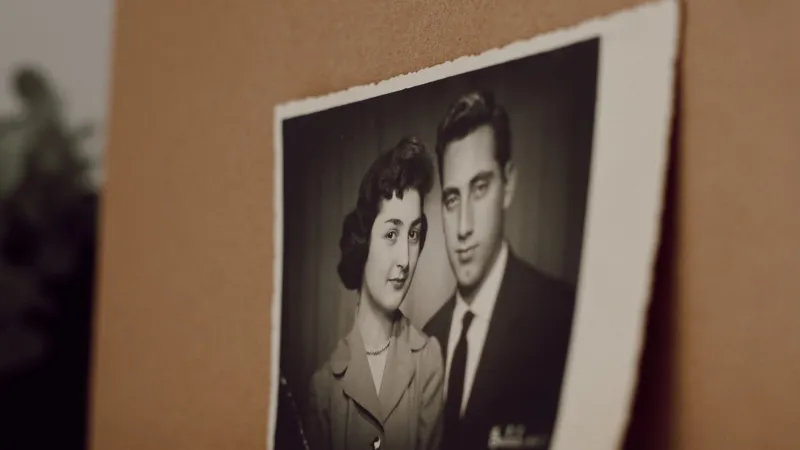
There is a version of you that exists nowhere except in the amber of your own recollection. This person was more carefree, more certain, more alive to the particular warmth of summer afternoons that seem, in retrospect, to have lasted forever. You carry this figure with you — through disappointments, through the gray arithmetic of adult life — as a kind of proof that something once felt whole. The problem, and it is a profound one, is that this person is largely a construction. Not a memory, but a myth. And your brain built it deliberately.
The Archive That Rewrites Itself
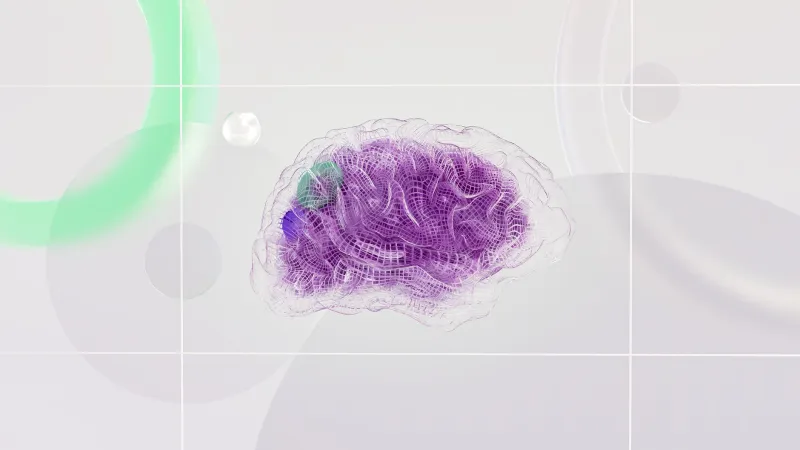
For most of the twentieth century, popular understanding treated human memory as something resembling a filing cabinet — imperfect, perhaps, but fundamentally preservationist in intent. Neuroscience has since dismantled that model entirely. What we now understand is that memory is reconstructive rather than reproductive. Each time a recollection is accessed, it is not simply retrieved; it is reassembled from fragments, colored by present mood, and then stored again in its altered form. The technical term for this process — reconsolidation — describes a mechanism that is elegant in its efficiency and ruthless in its implications.
When psychologist Elizabeth Loftus demonstrated in the 1970s that entirely false memories could be implanted through suggestion, she cracked open a question that has only grown more urgent: if memory is this malleable, how much of what we believe about our own histories is accurate? The answer, research increasingly suggests, is considerably less than we would like. We do not remember our childhoods so much as we narrate them — and the narrator, as any literary critic will tell you, is never neutral.
Why the Brain Flatters the Past
The nostalgia instinct is not a malfunction. It is, in evolutionary terms, deeply purposeful. Cognitive scientists have identified what they call the "reminiscence bump" — the tendency for adults to recall a disproportionate number of vivid, emotionally significant memories from adolescence and early adulthood. These years, marked by novelty and identity formation, are encoded with unusual intensity. But intensity is not the same as accuracy, and emotional salience is not the same as historical fidelity.
More telling still is the phenomenon psychologists call "fading affect bias" — the well-documented tendency for the emotional sting of negative memories to diminish over time at a much faster rate than the warmth of positive ones. We are wired, in other words, to forget what hurt and preserve what glowed. This asymmetry produces a past that is structurally more pleasant than the present ever managed to be, a horizon that forever recedes in golden light.
The brain does this, researchers believe, because a coherent and largely positive self-narrative is essential to psychological stability. We need to feel that we have been someone worth being. Nostalgia, in this reading, is less a form of remembering than a form of self-preservation — a story we tell to justify our continued presence in the world.
Social Media as Time Machine, and as Trap
This neurological tendency would be complicated enough on its own. Then came the algorithms.
Features like Facebook's "Memories," Instagram's archive prompts, and Snapchat's retrospective notifications have industrialized nostalgia in ways that deserve serious scrutiny. These tools present curated fragments of the past — the smiling photographs, the celebratory posts, the evidence of connection — stripped entirely of the context that surrounded them. What you see is not your history. It is your history's highlight reel, algorithmically optimized to provoke the precise emotional response that keeps you engaged.
The effect is insidious because it feels like remembering. The brain receives these prompts and treats them as confirmatory evidence, reinforcing and embellishing the idealized self-narrative that reconsolidation has already been quietly constructing. Over time, the gap between who you actually were and who the archive suggests you were becomes not just wide but invisible. You grieve a version of yourself that the photographs imply existed but the full record — the anxieties, the loneliness, the ordinary Tuesday afternoons — would not support.
This is not a trivial distortion. Clinical psychologists have begun documenting what some call "nostalgic depression" — a persistent melancholy rooted not in actual loss but in the perceived loss of a self that was never quite real. The sufferer mourns a past that was always more fiction than fact, which means the mourning can never resolve. You cannot recover what you never had.
The Idealized Former Self as Identity Anchor
There is another dimension to this phenomenon that cuts closer to the philosophical questions that animate this publication. The fabricated past does not only distort our relationship to history — it actively shapes our relationship to the present and future self.
Psychologists who study identity continuity have found that people frequently use an idealized former self as a fixed point against which they measure all subsequent development. The college version of you, the pre-divorce version, the version that existed before the diagnosis or the layoff — these figures function as reference points for who you "really" are, implying that everything since has been a falling away. The self, in this framework, has already peaked. What remains is management of the decline.
This posture forecloses growth with remarkable efficiency. If your most authentic self is located in the past — even a past that was never quite as luminous as you now believe — then the present can only ever be a diminishment, and the future a further erosion. The void ahead feels less like possibility than like loss compounding.
Toward a More Honest Relationship With Who You Were
None of this is an argument against memory, nor against the genuine warmth that meaningful recollection can provide. There is real value in a life that feels continuous, in a self that has a story. The question is whether that story is one you have chosen with some degree of awareness, or one that your neurons and your notification settings have chosen for you.
What neuroscience ultimately offers here is not pessimism but an invitation to a more deliberate form of self-knowledge. If memory is reconstruction, then it carries within it the possibility of reconstruction done more honestly — with room for the ambivalence, the failure, and the mundane texture of a life actually lived. The past you carry does not have to be a monument to a self that never existed. It can be something more useful, and more true: evidence of a person who was complicated, imperfect, and entirely real.
The former you was not the best version. The former you was simply earlier. There is a meaningful difference, and recognizing it may be the first step toward inhabiting the present with something less like grief and more like attention.