Into the Void Where consciousness meets the cosmos.

Into the Void

Where consciousness meets the cosmos.

Latest Articles

The Freedom of Smallness: What Our Cosmic Irrelevance Can Teach Us About Living Well
Science & Philosophy

The Freedom of Smallness: What Our Cosmic Irrelevance Can Teach Us About Living Well

The universe is under no obligation to find us meaningful. For most of human history, that fact has been experienced as a wound. But a growing tradition of philosophical thought suggests it might be something else entirely — an invitation, and perhaps the most liberating truth physics has ever handed us.

Measured Into Oblivion: How Self-Tracking Technology Is Erasing the Self It Claims to Reveal
Culture & Existentialism

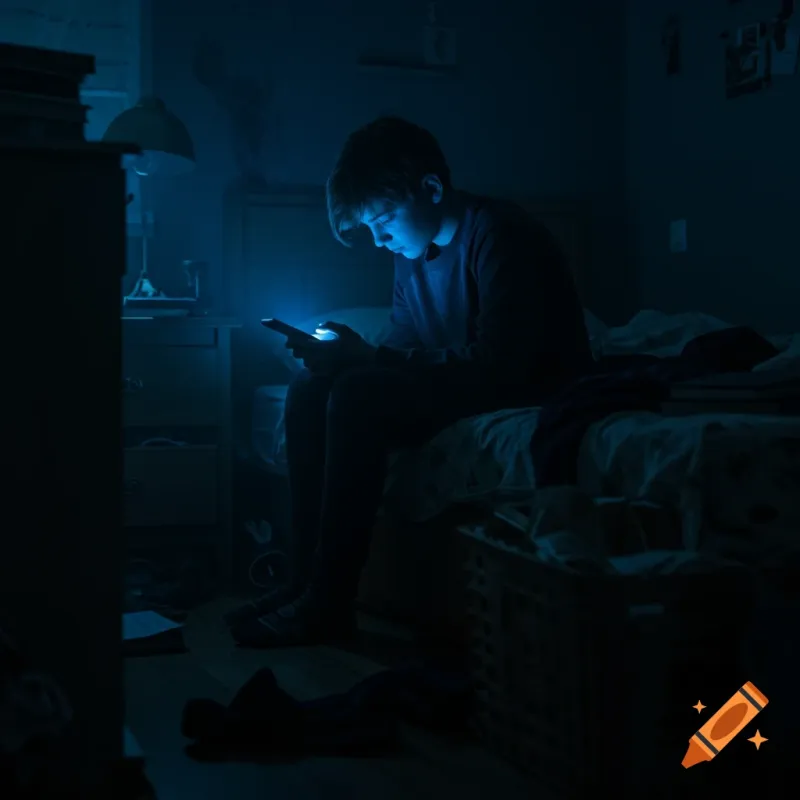
Measured Into Oblivion: How Self-Tracking Technology Is Erasing the Self It Claims to Reveal

We have never known more about ourselves — and yet something essential keeps slipping away. As health trackers, engagement metrics, and sleep analytics promise unprecedented self-knowledge, a quieter crisis unfolds beneath the data: the suspicion that the more we measure our lives, the less we actually inhabit them.

Intimate Strangers: The Hidden Cost of Outsourcing Human Connection to Machines
Culture & Existentialism

Intimate Strangers: The Hidden Cost of Outsourcing Human Connection to Machines

AI chatbots have become remarkably persuasive companions, capable of mirroring empathy, sustaining conversation, and never once growing tired of us. Yet beneath the warmth of these exchanges lies a quietly widening chasm—one that raises urgent questions about what we are really searching for when we reach out into the digital dark.

The Edited Self: How Your Brain Rewrites Your Past and What That Means for Who You Are
Science & Philosophy

The Edited Self: How Your Brain Rewrites Your Past and What That Means for Who You Are

Every time you recall a memory, your brain does not retrieve a fixed recording—it reconstructs the event from fragments, quietly altering it in the process. Neuroscience now confirms what philosophers have long suspected: the self we believe ourselves to be is, in significant part, a retrospective fiction, assembled fresh each time we reach for it.

Wired and Alone: How the Age of Infinite Connection Pushed Us Into the Void
Culture & Existentialism

Wired and Alone: How the Age of Infinite Connection Pushed Us Into the Void

We have built the most sophisticated communication infrastructure in human history, yet loneliness has reached epidemic proportions across the United States. This paradox — hyper-connectivity breeding profound isolation — may reveal something essential about the human need for meaning in a cosmos that offers none by default. The void, it turns out, is not only out there among the stars.

The Threshold: What Dying Brains and Deathless Minds Tell Us About the Self
Science & Philosophy

The Threshold: What Dying Brains and Deathless Minds Tell Us About the Self

Tens of millions of Americans report having experienced something at the edge of death that defied the boundaries of ordinary consciousness — luminous tunnels, encounters with the departed, a vast and wordless sense of homecoming. Whether these experiences are windows into a transcendent reality or the final, spectacular fireworks of a shutting-down brain remains one of the most fiercely contested questions in contemporary neuroscience and philosophy. What is certain is that they force us to ask

Alone in the Dark: What the Fermi Paradox Reveals About Our Deepest Human Fears
Culture & Existentialism

Alone in the Dark: What the Fermi Paradox Reveals About Our Deepest Human Fears

The Fermi Paradox is not merely a scientific puzzle—it is a mirror held up to the human psyche, reflecting our most primal anxieties about loneliness, purpose, and our place in an indifferent cosmos. Why does the silence of the universe disturb us so profoundly, and what does our obsession with cosmic neighbors reveal about our desperate need for meaning? Into the Void examines the existential undercurrents running beneath one of humanity's most haunting unanswered questions.

God in the Machine: Why Simulation Theory Has Become the Mythology of the Digital Age
Science & Philosophy

God in the Machine: Why Simulation Theory Has Become the Mythology of the Digital Age

Simulation theory lacks the empirical scaffolding of science, yet it has captured the imagination of millions with the tenacity of a genuine belief system. This piece argues that the theory's cultural staying power has little to do with its verifiability and everything to do with its function as a secular mythology—one uniquely suited to a civilization that has begun to understand itself in computational terms. What does it mean when a society's most popular metaphysical framework is borrowed fr

The Great Silence: How the Absence of Alien Contact Haunts the Human Imagination
Culture & Existentialism

The Great Silence: How the Absence of Alien Contact Haunts the Human Imagination

The mathematics insist we should not be alone. The silence insists otherwise. In the yawning contradiction between these two facts lives one of the most psychologically potent puzzles in the history of science — the Fermi Paradox — and its implications reach far beyond astronomy into the deepest questions of what it means to exist, to search, and to wait.

Reality as Code: What Quantum Physics Tells Us About the Universe We Think We Know
Science & Philosophy

Reality as Code: What Quantum Physics Tells Us About the Universe We Think We Know

When physicists observe a particle, they do not merely detect it — they appear to summon it into a definite state. This unsettling feature of quantum mechanics has reignited one of the oldest philosophical questions in human history: is the universe something that exists independently of us, or is it, in some profound sense, constructed? The simulation hypothesis, once confined to late-night dormitory debates, is now drawing serious attention from theoretical physicists and consciousness researc