The Last Scarce Thing: How the War for Your Attention Is Rewriting the Nature of Thought

For most of human history, scarcity meant hunger, cold, or distance. Civilizations were built on the project of overcoming these deficiencies—of producing enough food, generating enough warmth, collapsing enough space between people and ideas. By nearly every material measure, the developed world has succeeded. Calories are cheap. Heat is abundant. Information travels at the speed of light.
Yet something stranger has happened in the wake of that triumph. As abundance flooded every channel of modern life, one resource quietly became more precious than oil, more contested than territory, more structurally important than any commodity traded on any exchange: the capacity of a single human mind to concentrate on a single thing.
We are living through the commodification of consciousness itself.
The Economics of a Mind Under Siege
The attention economy is not a new concept. Economists and media theorists have observed for decades that human attention, unlike most goods, cannot be manufactured or expanded. You cannot mine more of it. You cannot import it. Each person on earth possesses, at most, a few hours per day of genuinely focused cognitive engagement—and that supply is effectively fixed at birth.
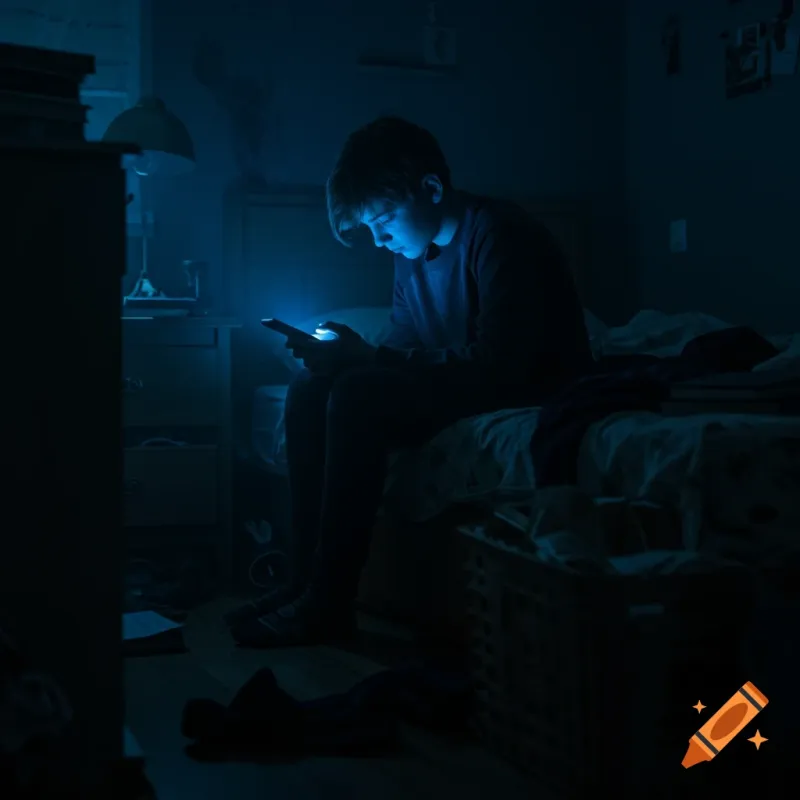
What changed in the last two decades was the arrival of systems sophisticated enough to exploit that constraint at industrial scale. Social media platforms, streaming services, algorithmic news feeds, and push-notification architectures were not designed with your flourishing in mind. They were designed—with extraordinary precision—to capture the maximum possible share of your waking hours and redirect it toward content that generates revenue. The product, as the well-worn phrase goes, is you. More specifically, it is the monetizable residue of your gaze.
This is no longer a metaphor. Behavioral economists now describe attention as a currency. Neuroscientists document the structural changes that chronic distraction imposes on the prefrontal cortex. Technologists speak openly about "engagement loops" and "variable reward schedules"—terminology borrowed directly from the study of addiction. The architecture of the modern internet was not assembled carelessly. It was engineered, iteratively and ruthlessly, to make sustained thought as difficult as possible while making compulsive consumption feel as natural as breathing.
When Abundance Becomes Its Own Trap
There is a particular cruelty in this arrangement that distinguishes it from older forms of deprivation. The person who lacks food knows they lack food. The person drowning in stimulation may never recognize what they are missing, because the signal of absence has been buried beneath an unrelenting cascade of noise.
This is what philosophers might call an epistemic trap—a condition in which the very faculties needed to diagnose a problem are the ones the problem has compromised. You cannot easily think your way out of a diminished capacity to think. You cannot easily notice the erosion of depth when every surface has been made dazzling.
The philosopher Simone Weil once described attention as "the rarest and purest form of generosity." She meant it in a moral sense—the willingness to truly see another person. But her framing carries an unintended technical accuracy for our moment. Attention is rare. It is the rarest thing left. And in its scarcity, it has become the central battlefield of the twenty-first century.
The Existential Stakes of a Distracted Species
Where Into the Void has previously explored how consciousness navigates the vast silence of the cosmos, or how the self persists through the fog of memory and time, this crisis presents a different kind of void—not the grand emptiness of space, but the interior emptiness of a mind that has been systematically hollowed out by its own tools.
Consider what deep attention actually makes possible. It is the substrate of genuine empathy, which requires holding another person's reality in mind long enough to feel its weight. It is the precondition for ethical reasoning, which demands that we sit with complexity rather than reach for the nearest satisfying simplification. It is the foundation of creativity, which emerges not from the speed of association but from the slow pressure of sustained inquiry. Strip these capacities away—or degrade them incrementally, year by year, notification by notification—and you do not merely produce a population that is less productive. You produce a population that is less human in the fullest sense of that word.
This is not alarmism. It is a structural observation about what consciousness is for. The human brain did not evolve to process three hundred stimuli per hour. It evolved to track a horizon, to follow a thought to its conclusion, to sit in the discomfort of uncertainty long enough to arrive at something true. When that architecture is chronically overloaded, it does not simply slow down. It reorganizes. It learns to expect interruption. It begins to experience depth as discomfort and novelty as relief.
Reclaiming the Interior
The question that haunts this analysis is not merely diagnostic. It is prescient: what, if anything, can be done?
Some researchers advocate for structural regulation—treating attention the way we treat other public goods, imposing limits on the manipulative design practices that platforms deploy against their own users. Others point toward individual practice: the deliberate cultivation of contemplative habits, the conscious rationing of digital consumption, the rediscovery of long-form reading and sustained conversation as forms of cognitive resistance.
Both responses have merit. Neither is sufficient alone. The war for attention is not a personal failing dressed up as a systemic problem, nor is it a systemic problem that absolves individuals of agency. It is, more precisely, a civilizational negotiation—one that demands we decide, collectively, what kind of minds we want to inhabit and what kind of world those minds are capable of building.
There is something almost cosmically ironic in the situation. Humanity has spent millennia reaching outward—toward the stars, toward understanding, toward connection across impossible distances. And now, at the moment of our greatest technological reach, the most urgent frontier may be inward: the defense of a small, quiet space inside the skull where a thought can unfold without being interrupted.
The Void Within
Into the Void has always been concerned with the territory where consciousness meets the cosmos—where the interior life of a single mind brushes up against the incomprehensible scale of existence. There is no more urgent expression of that meeting point than this one.
The cosmos does not care whether you are paying attention. It will continue its indifferent expansion regardless of whether you scroll or sit still, whether you chase the next notification or follow a single idea to its farthest reach. But you will care. Or rather, a version of you that has preserved its capacity for depth will care—will find meaning, will form genuine bonds, will wrestle with the hardest questions available to a conscious creature in a universe that offers no easy answers.
That version of you is worth defending. The attention it requires is not a luxury. It is the last truly finite thing you possess—and the one most worth keeping.