Echoes on Repeat: How Algorithms Trap Us Inside Our Own Pasts
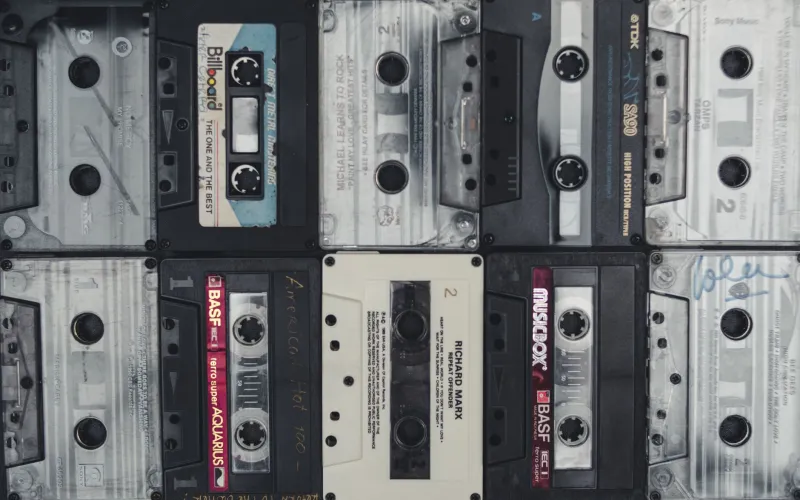
There is a peculiar comfort in hearing a song you loved at seventeen. The melody does not merely arrive in your ears — it arrives in your body, in the particular weight of an afternoon you can almost but never quite fully recover. Streaming platforms and social media feeds have learned to exploit this with surgical precision. They have discovered that nostalgia is not merely an emotion; it is a vulnerability, and vulnerabilities, in the architecture of engagement-maximizing systems, are resources to be harvested.
The recommendation algorithm does not care about your growth. It cares about your attention. And nothing holds attention quite like the ghost of who you once were.
The Architecture of Comfortable Loops
To understand how we arrived here, it helps to consider what these systems are actually optimizing for. Platforms like Spotify, YouTube, TikTok, and Netflix do not measure success by how much your worldview expanded or how many genuinely unfamiliar ideas you encountered. They measure watch time, click-through rates, and return visits. The metric is retention, and retention is most reliably achieved through familiarity.
Psychological research has long established that human beings respond to familiar stimuli with measurable neurological reward. The brain releases dopamine not only in response to novelty, but — and this is the critical detail — in response to the anticipation of a known pleasure. Algorithms have effectively industrialized this mechanism. By mapping the contours of your listening history, your viewing patterns, and your engagement peaks, they construct a model of your emotional past and then feed it back to you in perpetual rotation.
The result is not a curated present. It is a manufactured yesterday, served daily.
When the Self Becomes a Data Set
Philosophers have long grappled with the relationship between memory and identity. John Locke argued that personal identity is constituted by continuity of consciousness — specifically, by the thread of memory that connects who you are now to who you were then. If that is true, then the question of who is doing the remembering, and what is shaping the contours of that memory, carries profound weight.
When an algorithm decides which songs from your adolescence surface in your weekly playlist, it is not merely curating entertainment. It is participating in the construction of your self-narrative. It is selecting which emotional touchstones remain vivid and which fade into obscurity. In a very real sense, it is editing your past on your behalf — and doing so not in service of psychological coherence or existential growth, but in service of continued platform engagement.
This is the quiet philosophical crisis embedded in something as mundane as a Spotify Wrapped notification. The data profile is not a portrait of who you are. It is a portrait of what kept you scrolling. And increasingly, those two things are becoming indistinguishable.
The Foreclosure of the Future
Consider what it means, culturally, when an entire generation receives its sense of history through algorithmic mediation. In the United States, the nostalgia economy has become one of the dominant forces in popular culture — franchises are rebooted, childhood IP is endlessly recycled, and the aesthetic vocabulary of the 1980s and 1990s has become a kind of permanent ambient wallpaper across streaming platforms and social feeds alike.
This is not coincidence. It is a feedback loop operating at civilizational scale. Algorithms learned that nostalgia performs well. Creators and studios responded by producing content designed to trigger nostalgic response. Audiences engaged with that content, reinforcing the algorithmic signal. The loop tightened. And somewhere in that tightening, the future — genuinely strange, genuinely new, genuinely unrecognizable — began to feel less like a destination and more like an inconvenience.
The philosopher Walter Benjamin once described the "Angel of History" as a figure blown backward into the future, unable to look away from the wreckage of the past. It is a haunting image. But Benjamin's angel at least had the wreckage thrust upon it by the storm of progress. We have built systems that voluntarily strap us into that backward-facing position and call it personalization.
The Illusion of Discovery
It would be unfair to suggest that algorithmic recommendation is without value. These systems genuinely do surface music, films, and ideas that users might not have encountered through purely random browsing. The issue is not that they recommend — it is how they recommend, and what the cumulative effect of that process looks like over years of use.
Researchers studying recommendation systems have documented what is sometimes called the "filter bubble" effect, a phenomenon in which users are progressively insulated from content that diverges significantly from their established preferences. Over time, the algorithm's model of you becomes more confident, more rigid, and more self-referential. What begins as a helpful nudge toward something you might enjoy gradually becomes a chamber in which only certain frequencies are permitted to resonate.
The irony is that this process feels like discovery. Each recommendation arrives with the implicit promise of something new. But newness, in the algorithmic sense, is almost always defined relative to your existing profile — a slight variation on a known theme, a second cousin of a song you already love. True otherness, the kind that genuinely disrupts your sense of self and expands your imaginative horizon, is by definition the kind of content the algorithm is least equipped — and least incentivized — to deliver.
Recovering the Unfamiliar
There is something worth salvaging in nostalgia itself. The longing for the past is not pathological; it is deeply human. It connects us to the people we were, to the communities that shaped us, to the moments that gave our lives texture and meaning. The problem is not that we remember. The problem is that we have outsourced the act of remembering to systems that have no interest in our becoming.
To reclaim a relationship with time that is genuinely one's own requires something that algorithmic culture actively discourages: the willingness to be bored, confused, or unmoved by something new. It requires seeking out the unfamiliar not because it is comfortable, but precisely because it is not. It requires understanding that identity is not a fixed data set to be optimized, but a living process — one that demands friction, surprise, and the occasional encounter with something that has no idea who you used to be.
The void, after all, is not behind us. It stretches forward, into territory the algorithm cannot map, because it has never been traveled before. The question is whether we are willing to look in that direction — or whether we will keep scrolling backward, chasing a version of ourselves that the machine has decided is the most profitable one to remember.
The cosmos does not offer us a replay button. Perhaps that is not a limitation. Perhaps that is the point.